Circular Farming & AD
Caroline Randall
Marketing Manager
Farm circularity and sector resilience have never been more important. Agricultural policy is in a transition phase, where farmers are navigating changing priorities and what their future looks like, whilst at the same time markets are volatile and input costs have just experienced the greatest and most rapid spike of the past decade since the Middle East conflict escalated.
A third of the world’s fertiliser and over 20% of crude oil reserves rely on the Strait of Hormuz for distribution, so the de facto closure of this critical trade corridor mean reduced supply and higher prices are already being seen, hitting food production and agriculture at a particularly sensitive time as the peak spring drilling window commences following the first glimmers of Spring.
Much of the fertiliser being used this season should already be sat on-farm or in stores in the UK awaiting distribution, so price impacts for fertiliser on this year’s harvest will hopefully not be too severe. However, fuel costs continue to escalate and forward pricing is not being offered right now due to the volatility, so once again farmers are left to bear this volatility with little or no protection and not yet knowing what their produce will be worth or how much they will gather when it comes to harvest.
Building resilience
Farmers are keen to build resilience to protect their businesses and the broader industry; given external and unforeseen events there’s a critical need to accelerate action. However this comes at a time when finances are already tight and the returns from last year’s harvest were in many cases, marginal.
In the current landscape, it seems hard to imagine a situation where farmers have more control over their costs and returns, where they are not reliant on external markets, no longer have to be price takers, and can continue producing food at today’s levels but in a more sustainable manner. All this whilst also improving fuel and energy security and building business resilience, and still actively farming without having to diversify into non-farming activities to support their families and their livelihoods.
Anaerobic digestion (AD) can be this lifeline, but there’s a need to act fast before it’s too late. Agriculture is in decline and the rate of decline has intensified, with more agricultural businesses closing between 2024 and 2025 than in any period since 2017. Bringing a new life to agriculture, allowing farmers to manage their land and resources in a way which improves food and energy security in parallel and showing the next generation there is a future is critical.
Anaerobic Digestion
Anaerobic digestion (AD) is a well-established technology here in the UK and beyond. AD systems have been driven to ever larger scales by policies, seeking to provide treatment capacity for increasing volumes of food waste whilst also decarbonising the gas grid, to deliver low carbon heat to households and businesses via existing infrastructure.
However, at the turn of the previous decade the preference was for smaller-scale, decentralised facilities producing biogas for conversion into heat and power on-site, for local distribution and use. A resurgence in interest on this type of system has never been timelier.
Integration of AD and agriculture reframes the technology from being purely an energy generator to being a circular system which can deliver food and energy security; air, soil and water quality improvements; fugitive methane capture; low carbon fuel for rural areas; decarbonised supply chains; and resilience at business, regional and national level.
At a farm-level, farmers have two main options:
- Grow or supply feedstock into a local AD facility, having a direct line of contact with the market to be able to negotiate and agree a fair price, whilst benefitting from the nutrients being returned to the farm in the form of digestate. This not only retains value within the local economy, but it also builds business and sector resilience by providing viable outlets for farm produce, in turn improving profitability and allowing for the reinvestment of profits into the local land-based economy to protect and enhance valuable soils and resources for future generations.
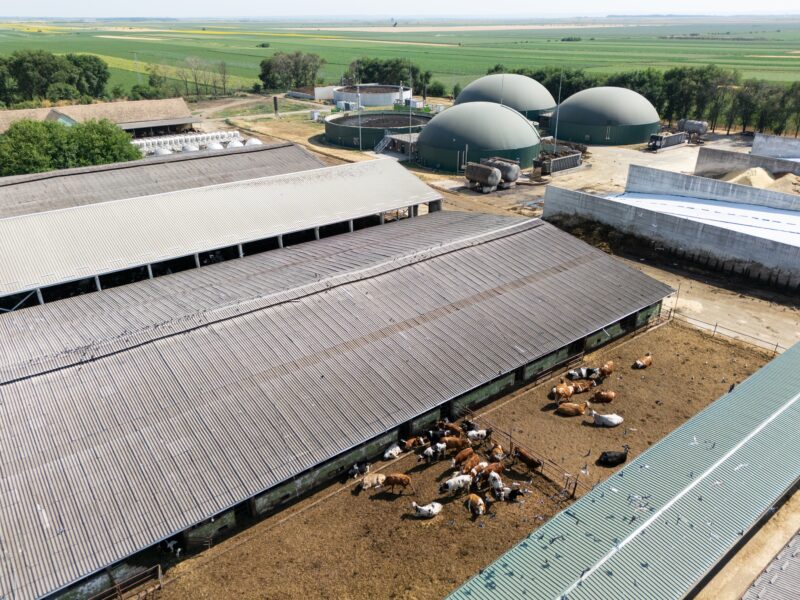
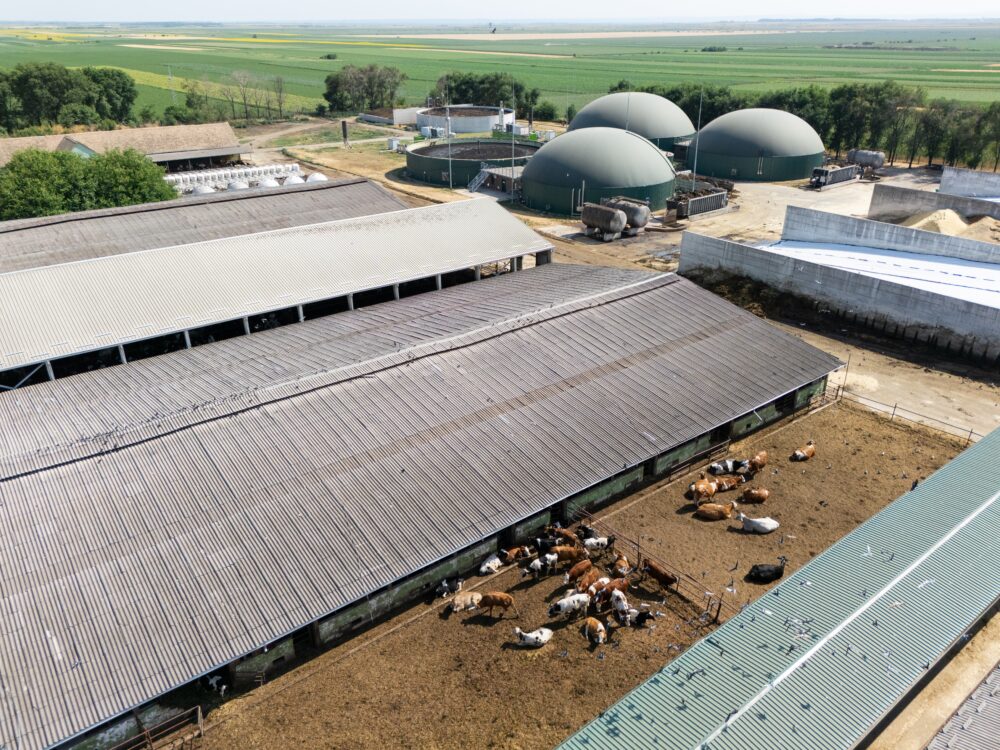
- Develop an on-farm AD facility, typically utilising livestock waste to capture fugitive methane, retain nutrients and generate heat and power for use on site or locally. This option is typically low cost but without the benefits of subsidy, deployment is low due to a number of challenges that make development and compliance costs and requirements inordinate to the risk and scale involved.
The former will happen once the future policy framework embeds, but the latter can only be realised with the right support as investment decisions in agriculture needs to be made with confidence and longevity in mind.
It is hugely disappointing to see the latest round of the Sustainable Farming Incentive (SFI) and the Farming Equipment & Technology Fund (FETF) missing a trick by excluding any measures that could drive growth in these areas. Such schemes are aimed at supporting a move to more sustainable farming practices whilst protecting the environment, enhancing productivity and reducing emissions.
The FETF focusses on three key pillars, with £20 million allocated for equipment to boost farm productivity and £10 million for slurry management. AD is a great solution under both of these banners, but frustratingly AD or methane capture are not considered eligible activities.
Actions are underway to address these frustrations and to stimulate growth in ways other countries and sectors have achieved, so watch this space for further updates and please do reach out if you have specific interests in these topics.